Introduction
Open markets are the primary distribution infrastructure of Africa's fashion economy. They source, sort, repair, upcycle, and resell garments at a scale that rivals formal retail across the continent. Markets like Kantamanto in Accra, Gikomba in Nairobi, and Balogun in Lagos are not peripheral to the African fashion supply chain, they are its operational core, connecting global secondhand flows to millions of local consumers and sustaining entire ecosystems of tailors, upcyclers, alterations workers, and street-level retailers.
The scale of these markets is significant. The Middle East and Africa secondhand apparel market was valued at $1.6 billion in 2023 and is projected to reach $3.34 billion by 2032, growing at a compound annual rate of 8.43 percent. Africa absorbs an estimated 80 percent of the world's secondhand clothing by volume. Kenya alone imported $218.2 million worth of used garments in the year ending March 2024, a 14.5 percent increase year-on-year, with approximately 24 million Kenyans relying on the mitumba trade for their clothing needs. Yet despite this commercial significance, open fashion markets across the continent remain almost entirely without regulatory frameworks governing trader protection, infrastructure safety, or supply chain accountability.
The consequences of this absence are not theoretical. In January 2025, the world's largest secondhand clothing market burned. The Kantamanto fire did not only destroy property, it disrupted a circular fashion system that processes 25 million garments per month and sustains more than 30,000 retailers, tailors, and upcyclers. The case for regulatory reform is now urgent, and the policy rationale is clear.
The Role of Open Markets in Africa's Fashion Supply Chain
Open markets perform functions that formal retail infrastructure does not. They operate as the receiving end of global secondhand clothing flows, with Africa accounting for the majority of international used garment imports by volume. The global wholesale secondhand clothing trade was valued at over $4.9 billion in 2024, with an estimated 24.2 billion individual items exported from developed economies. Sub-Saharan Africa is the primary destination for these flows, receiving garments primarily from the United States, the United Kingdom, China, and Canada.
At the market level, these garments are sorted, graded, repaired, altered, and redistributed by networks of traders working in close physical proximity. Kantamanto Market in Accra, the largest secondhand clothing market in West Africa, receives 15 million garments from the Global North every week and recirculates 25 million items per month through resale, repair, reuse, and upcycling. The community within the market encompasses more than 30,000 people: retailers, tailors, upcyclers, and kayayei (the head-carriers who move merchandise through the market). In 2021, Ghana became the world's largest importer of used garments by value, with imports valued at over $200 million.
Gikomba Market in Nairobi is East Africa's largest open-air market and operates as the regional hub for the mitumba trade. By 2024, the Kenyan government estimated that 100,000 people worked in the market in various capacities, up from 65,000 in 2014. The market's secondhand clothing section is the largest in Kenya and a central node through which garments are distributed to traders across East and Central Africa. These markets are not simply places to buy clothes, they are fashion supply chain infrastructure, providing the sorting, repair, and redistribution functions that allow used garments to reach consumers affordably and at scale.
The fashion dimension of these markets extends beyond secondhand trade. Open fabric markets and tailoring clusters, from Balogun Market's textile section in Lagos to Kariakoo in Dar es Salaam, form the production base for Africa's bespoke and ready-to-wear sectors. Independent tailors operating in and around these markets constitute the manufacturing infrastructure upon which designers, fashion brands, and individual consumers depend. The informal fashion economy they represent sits largely outside formal regulatory structures, leaving workers, traders, and the supply chains they support without legal protection.
Recurring Disasters and the Cost of Unregulated Infrastructure
The absence of enforceable safety standards in open fashion markets has produced a pattern of recurring, preventable disasters. The most significant recent example is the Kantamanto Market fire of 1 January 2025. The blaze destroyed over 60 percent of the market, more than 33,000 square metres of stalls and structures, and directly affected the livelihoods of over 10,000 people. Two people died as a direct result of the fire, and three further deaths followed in subsequent weeks. Preliminary investigations by the Ghana National Fire Service indicated that faulty electrical connections were the likely cause, though arson was not ruled out.
The Or Foundation, which operates within the market, estimated that $5 million would be needed to fully restore Kantamanto and rebuild with safer infrastructure. The scale of the economic loss to individual traders was severe: most had no insurance, no formal contracts, and no legal recourse. One trader told journalists she had imported goods on credit less than a week before the fire, expecting to profit in the new year. She faced total loss with no mechanism for recovery. This is not an exceptional case, it reflects the structural position of the vast majority of fashion market traders across the continent.
The Gikomba Market in Nairobi presents an equally concerning picture. The market has experienced fires in 2015, 2018, 2020, 2021, 2022, 2023, and 2024, an almost annual cycle of destruction affecting the secondhand clothing section that forms its commercial heart. The December 2023 fire destroyed goods of unknown value and caused losses running into millions of shillings. In June 2018, a fire at the market killed 15 people and injured at least 60. The cause of fires has ranged from electrical faults to suspected arson, with authorities repeatedly calling for investigations that have not produced lasting structural reform. As recently as February 2025, yet another fire broke out in the market.
The structural causes are consistent across incidents and markets: overloaded or illegally connected electrical infrastructure, combustible stall construction with no fire-resistant materials, absence of emergency access lanes within the market, no fire suppression systems, and market management bodies with no legally defined accountability for safety conditions. These are not unavoidable features of informal trade, they are the predictable consequences of operating without regulatory standards.
The Industry Response and Its Limits
The Kantamanto fire drew international attention to the governance gaps that leave fashion market traders exposed. The Or Foundation distributed $1.5 million in emergency relief to more than 9,200 people impacted by the fire. Brands including Vestiaire Collective, Puma, eBay, Debrand, and a consortium of Belgian fashion companies contributed to rebuilding efforts. Following the fire, the market and the Or Foundation reached an agreement to install fire lanes and approximately 1,000 fire extinguishers, and plans were initiated to re-electrify the market.
However, the broader fashion industry response was notably limited. The majority of global fashion brands whose garments flow into Kantamanto, including brands such as Marks & Spencer, Next, H&M, Gap, Nike, Adidas, and ASOS, which together accounted for the largest shares of branded waste identified at the adjacent beach in 2024, did not publicly acknowledge the fire or contribute to relief efforts. This asymmetry is significant: the market absorbs the overflow of fast fashion from the Global North, approximately 40 percent of which arrives as non-sellable waste and ends up in landfill, yet the brands generating that flow bear no regulatory responsibility for the market conditions under which it is processed.
In Kenya, the government response to Gikomba's repeated fires has been largely structural but slow. Nairobi County allocated KES 259.7 million in its 2024 budget for a new seven-storey market complex at Quarry Road, designed to house over 1,700 traders in organised and safer conditions. The facility was announced as completed in November 2025. While the investment is significant, it addresses only a fraction of the 100,000 people working across the broader Gikomba ecosystem, and the allocation process for stalls in the new facility had not been transparently communicated to trader associations at the time of announcement, raising concerns about equitable access.
Why Fashion Markets Require Dedicated Regulatory Frameworks
The fashion dimension of open market regulation carries specific policy considerations that distinguish it from general market governance. The secondhand clothing trade is embedded in global supply chains in which African markets sit at the most resource-intensive and legally unprotected end. Brands generating garment volumes that flow into markets like Kantamanto and Gikomba are subject to increasingly stringent extended producer responsibility (EPR) regulations in Europe and North America. Evidence gathered at Kantamanto has been directly used in lobbying for EU EPR fashion regulation. Yet the markets absorbing that volume operate without equivalent regulatory protections.
The growth trajectory of the sector strengthens the case for early regulatory intervention. The Middle East and Africa secondhand apparel market is projected to double from $1.6 billion in 2023 to $3.34 billion by 2032. Africa's broader apparel market reached approximately $70.6 billion in 2024. As both formal and informal fashion markets grow, the infrastructure risks associated with unregulated open market environments will compound. Regulation proportionate to the sector's scale and growth trajectory is not only justified, it is increasingly necessary to protect that growth.
The gender dimension is equally material. Women constitute the overwhelming majority of traders in African fashion markets. In Ghana, women dominate the retail and alterations workforce within Kantamanto. In Kenya, women form the majority of mitumba vendors across Gikomba and comparable markets. These are workers with no formal employment protections, no insurance, and no compensation mechanisms when disaster destroys their stock and tools. A regulatory framework for fashion markets is, in significant part, a gender economic policy: it protects the livelihoods of women who are otherwise entirely without recourse.
Conclusion
Africa's open fashion markets are not informal backwaters, they are the operational infrastructure through which a $1.6 billion regional secondhand fashion economy functions, connecting global garment flows to local consumers, sustaining ecosystems of traders, tailors, and upcyclers, and absorbing volumes of textile waste that global brands have failed to manage responsibly.
The Kantamanto fire of January 2025, which destroyed over 60 percent of the world's largest secondhand clothing market and eliminated the livelihoods of more than 10,000 people in a matter of hours, makes the consequences of absent regulation concrete and quantifiable. The recurring fires at Gikomba, documented annually since 2015, make the pattern systemic. These are not isolated incidents. They are the foreseeable results of markets operating at enormous commercial scale without fire safety standards, electrical infrastructure standards, or trader protection frameworks.
Effective regulation does not mean formalisation in a form that excludes the traders these markets depend on. It means enforceable minimum standards for infrastructure safety, legally defined accountability for market management bodies, and trader protection mechanisms that provide recourse when those standards are not met. As Africa's fashion sector grows and deepens its integration into global supply chains, the governance of the market infrastructure through which much of that trade flows is a policy priority that can no longer be deferred.
Tags
Open Markets Secondhand Fashion Market Regulation African Fashion Kantamanto Gikomba Mitumba Trader Protection Fashion Policy Circular Economy
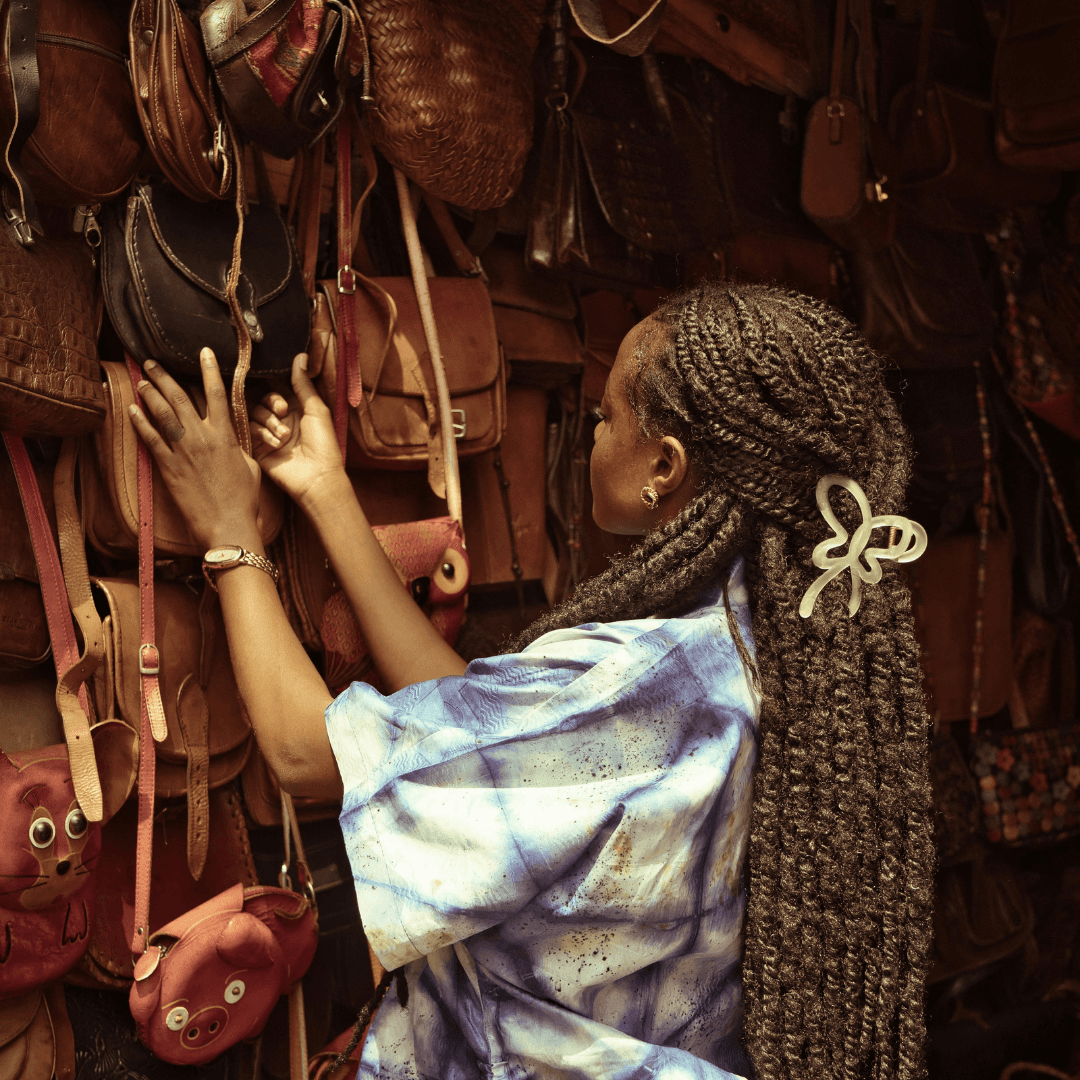
Cover Image Credit: Hakim Level (Pexels)