Introduction
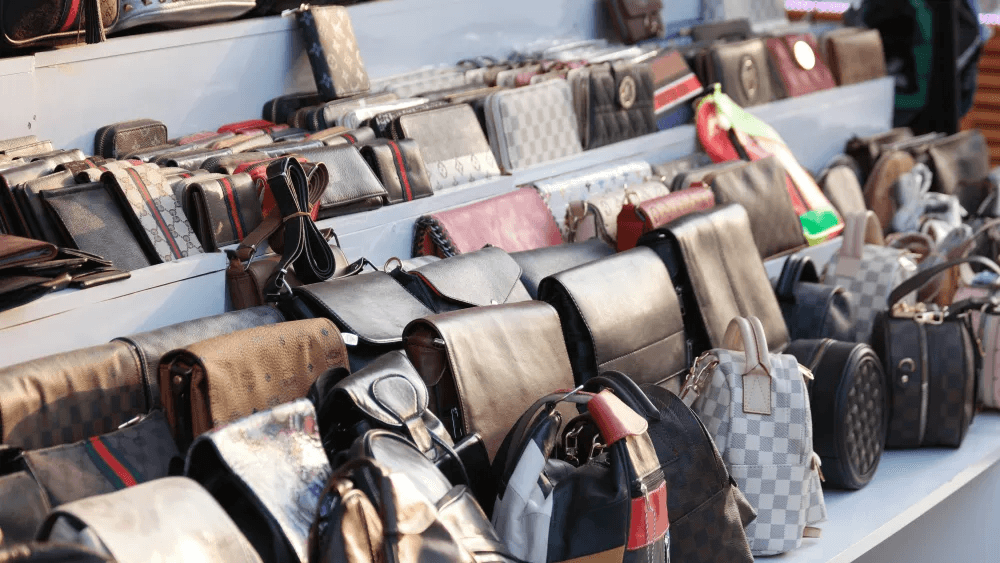
Counterfeit goods circulate widely across African markets, particularly in fashion, footwear, and accessories. Their presence reflects complex demand dynamics, price sensitivity, and gaps in supply rather than simple criminality. Understanding the economic impact of counterfeits requires moving beyond enforcement narratives to examine how they interact with local industries.
This analysis focuses on how counterfeiting affects domestic production, employment, innovation, and long-term industrial development, while also identifying opportunities for policy-led market strengthening.
Counterfeits and Local Manufacturing
Counterfeit imports often compete directly with locally produced garments and accessories. When low-priced copies flood markets, domestic manufacturers struggle to achieve scale, invest in equipment, or maintain consistent production cycles.
However, this pressure also highlights unmet demand for affordable, quality products. Strengthening local manufacturing capacity can redirect consumer demand toward legitimate domestic alternatives, reducing reliance on counterfeit supply chains.
Employment and Informal Sector Dynamics
Counterfeit trade supports extensive informal employment across distribution, retail, and logistics. While these jobs provide income, they rarely translate into stable wages, skills development, or upward mobility.
Redirecting labour toward legitimate value chains through skills training, cooperative models, and market access initiatives can preserve employment while improving job quality and long-term income security.
Revenue Loss and Fiscal Implications
Counterfeits reduce taxable economic activity by operating largely outside formal systems. Governments lose revenue that could otherwise support infrastructure, training programmes, and industry development.
Improved enforcement combined with incentives for formal participation increases fiscal capacity while strengthening trust between businesses and public institutions.
Impact on Innovation and Brand Development
Designers and emerging brands face heightened risk when their products are copied quickly and cheaply. This can discourage investment in original design, branding, and quality improvement.
At the same time, counterfeiting underscores the commercial value of strong brands. Strategic IP protection, consumer education, and market differentiation help local brands convert creativity into durable competitive advantage.
Consumer Trust and Market Signals
Widespread counterfeits blur distinctions between authentic and imitation goods. This undermines consumer confidence and distorts price signals across markets.
Clear labeling, certification systems, and public awareness initiatives help rebuild trust while supporting informed consumer choice.
Trade, Competitiveness, and Regional Markets
Counterfeit flows often exploit weak border controls and fragmented customs systems. These weaknesses affect not only IP enforcement but also broader trade competitiveness.
Strengthening regional cooperation and customs harmonisation improves trade efficiency while reducing illicit market penetration.
Policy Pathways for Economic Resilience
Effective responses to counterfeiting combine enforcement with industrial policy. Supporting local production, improving access to finance, and expanding distribution channels reduces market space for illicit goods.
When policy focuses on building legitimate alternatives, counterfeiting becomes less economically attractive across the value chain.
Conclusion
Counterfeiting poses real economic challenges for African industries, but it also exposes structural gaps that can be addressed through strategic intervention. By strengthening local production, protecting innovation, and improving market governance, African fashion industries can convert vulnerability into resilience.
A development-oriented approach positions IP protection not as a constraint, but as a tool for inclusive industrial growth.
Tags
Counterfeiting
Local Industries
Economic Impact
Fashion IP
Market Development
African Trade
Cover Image Credit: WWD